Over two millennia, the christian church has been at the forefront of social justice and care for the vulnerable.
From care of the poor, the sick and abandoned babies in the early church, through establishing hospitals and schools, to the end of slavery and the civil rights movement, Christians have had a large impact.
But what about the largest justice issue of the twenty-first century – climate change? The church has perhaps been slow to be active in this, but it is beginning to get up to speed.
(See note for the significance of this title.)
From little things ….
It started in the sixties
In postwar Europe, Christian theologians began reflecting on humanity’s relationship with nature. But it took a paper by historian Lynne White Jnr in 1966 (“The Historical Roots of Our Ecologic Crisis“) to shake things up.
White argued that the human race’s increasing impacts on the world around us weren’t simply due to our increasing use of technology, but were a product of our Western worldview. Both Christian belief and the enlightenment encouraged the belief that human interests took precedence over the value of nature, thus leading to a willingness to destroy nature for short term human benefit.
He proposed an alternative Christian view, modelled on St Francis of Assisi, who saw humans as much closer to the rest of nature. He said we need to regain his perspective that while we may be spiritual and smarter, we are nevertheless part of nature, made of the same chemicals and DNA, and dependent on the whole of nature.
Many see White’s paper, and subsequent writings, as highly influential on future Christian environmental activism.
Joining the dots
In the 1970s, some churches began connecting ecology to faith and justice. The World Council of Churches (WCC) began integrating ecology into its justice work. And Pope John Paul II proclaimed Saint Francis of Assisi the patron of those who promote ecology, thus foreshadowing his increasing interest in ecological matters.
In the 1980s more Christian organisations started to focus on the environment.
- The Christian environmental organisation, A Rocha was established in Portugal and by 2024 had spread to more than 20 countries worldwide.
- WCC published “Justice, peace and the integrity of creation: a call to common commitments on issues that are urgent for the survival of humankind”, which challenged Christian individuals, denominations, and churches around the world to work together to resist social and ecological destruction and to create viable alternatives to corporate globalization.
- The Patriarch of the Orthodox Church in Constantinople established 1st September as a day of Prayer for Creation.
In the 1990s, Catholics, Orthodox and Protestants were all recognising that Christians are stewards of God’s creation, not just consumers.
- The 1990s saw further expansion in environmental concern in churches worldwide, in Africa, Latin America and Asia.
- In 1990, the Pope’s World Day of Peace message was “The Ecological Crisis: A Common Responsibility”, the first formal papal teaching on the environment.
- Also in 1990, the Anglican Consultative Council (ACC) added a fifth item to its four-fold mission:“To strive to safeguard the integrity of creation and sustain and renew the life of the earth”.
- The Evangelical Environmental Network was founded in 1993 to educate, inspire, and mobilise Christians in their efforts to care for God’s creation, and to be faithful stewards of God’s provision.
As far as I can tell, these initiatives showed little awareness of climate change, which was only beginning to be recognised as a serious issue, but this was beginning to change.
Climate awareness
Scientists had been aware since the middle of the nineteenth century that gases such as carbon dioxide (CO2) and water vapour could trap heat from the sun that would otherwise be reflected into space. This was known as the Greenhouse Effect, and it could change Earth’s energy balance and climate.
By the second half of the twentieth century two things became clear. Atmospheric levels of CO2 had been rising since the industrial revolution, and this was now causing global temperatures to rise.
This became a consensus view among scientists, research increased, computer models were developed and the Intergovernmental Panel on Climate Change’s First Assessment Report came out in 1990. The UN sponsored “Conference of the Parties” (COP) began in 1995 and are now held every year to review implementation of the Framework Convention on Climate Change.
Around this time, the general public were becoming more aware of problems with the climate, as they variously experienced, or heard of, heatwaves, bushfires, droughts, floods, sea level rise, fierce storms and coral bleaching.
It was now clear that the human race had to find ways to address this problem before its impacts were too severe.
Churches begin to take notice
As the new millennium dawned, many church organisations were becoming aware of the dangers of climate change, and were working on their response.
- The first church action on climate change I have been able to find was in 1988, when the WCC launched its Climate Change Program to promote the transformation of socioeconomic structures and personal lifestyle choices that contribute to global warming.
- The ACC made its first warning on “processes which increase global warming and affect climate change” in 2002.
- The Catholic Climate Covenant began in the US in 2006, and is now a large organisation responding to the climate crisis with faith, advocacy, climate action, and education. It is making a big difference by encouraging and helping churches and Catholic Christians to take practical steps to reduce energy usage, control waste and care for ecology..
- Also in 2006, the National Association of Evangelicals began an Evangelical Climate Initiative campaign, saying that that saving the creation required nothing short of a new moral awakening “clearly articulated in Scripture and supported by science”. Unfortunately, more conservative evangelicals, while initally supportive, began to oppose any action on climate.
- Churches all over the world began to adopt the Season of Creation in September-October as part of the church calendar.
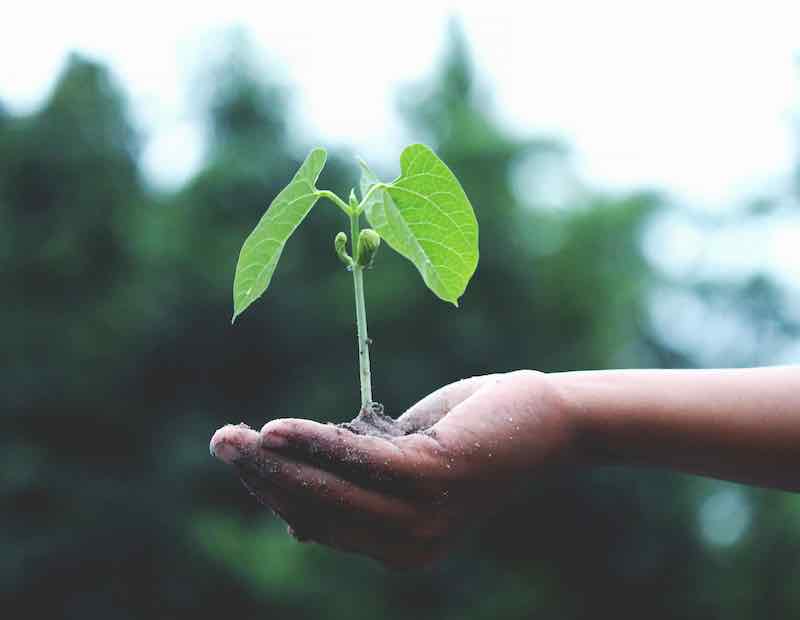
…. big things grow
By the end of the first decade of the new millennium, most churches were at least making statements advocating for climate action. Christians began to see that climate action was a matter of justice and “loving our neighbour”, as the most developed countries have caused most of the problem while the less developed countries tend to feel the worst of the climate pain.
Fossil fuel divestment
In 2014, the WCC committed to phasing out its investments in fossil fuels. Many member churches followed suit, and this continues to grow.
Laudato Si
In 2015 Pope Francis issued the encyclical Laudato Si to ”every living person on this planet”, outlining the destruction happening to our common home and the need to act. It covered a wide range of environmental concerns, including climate change.
The Laudato Si movement was then formed, giving Catholics worldwide a new way to be the church, acting for creation care and listening to the cry of the earth and the cry of the poor. It has grown to more than 8,000 “Animators” and nearly 900 Member Organisations, present in 115 countries on five continents, and organised into 30 chapters.
The 2025 Season of Creation culminated in a 3 day Laudato Si movement “Rising Hope Conference” held at the Vatican. More than a thousand participants from 80 countries celebrated the tenth anniversary of Laudato Si, by reflecting, praying, and discussing climate justice and the role of faith in ecological transformation. Religious leaders, scientists, activists, and communities shared experiences, challenges, and commitments that are now being transformed into concrete actions.
Indigenous people
Indigenous christians worldwide began to focus more and more on climate justice. Indigenous people have always tended to have a stronger focus on caring for the land (confirming Lynn White’s conclusion that western culture has become too divorced from the natural world). Climate change is of special urgent interest to Pacific Islanders, whose counties and lives are at imminent risk from rising water levels.
Christian attendance at COP
Christians and churches and indigenous people are now among the thousands of attendees at COPs.
Activism
Christians are now involved in various actions on climate change – lobbying parliamentary representatives, joining in youth climate strikes, protesting the development of new coal mines, buying their energy from renewable sources and divesting from fossil fuel investments.
In 2021 Pope Francis, Archbishop Justin Welby, and Patriarch Bartholomew made an appeal to world leaders at COP26 to act decisively on climate change. Pope Francis’ Laudate Deum (2023) intensifies his critique of climate inaction, and urged binding global agreements.
Why should churches care?
Isn’t the church’s business spiritual rather than political? Shouldn’t we care about saving souls rather than activism?
Churches are increasingly seeing their mission as spanning across all these issues. Jesus left us the call to love God, love neighbour and make disciples. Many churches now see that:
- Loving God includes loving his creation. Genesis says we are made in the image of God and calls us to be his agents on the earth. We are given the responsibility, not of subjugation, but of defending, guarding and carefully stewarding the earth.
- Loving neighbour requires us to care for the wellbeing of others and to ensure that our lives don’t harm theirs. Continuing use of fossil fuels is harming others and will harm us too. It is unjust.
- The use of fossil fuels, especially in western countries, is doing harm to many other countries. which is unloving. And being unloving to others won’t make it easy to make disciples. People will likely take more notice of our actions than our words.
What can churches do?
Learn
Before churches can be part of a move to combat climate change, they need to understand the problem and what constitutes effective action, so they can give credible reasons for people to make changes in their lives.
Leaders in churches can read climate scientists like Katharine Hayhoe (a Christian) to gain good factual information on how carbon dioxide traps heat and warms the earth, how this is making our climate systems more dynamic, chaotic and dangerous, and how phasing out fossil fuels and turning to renewable energy is the only way forward. Another useful source is Australia’s Climate Council.
We can all learn how climate change is harming some of the world’s most vulnerable. And it would help if we had a theological perspective on all this – how does climate actionmesh with the good news of Jesus?
Educate
If climate change is “the defining moral challenge of our time”, churches should be teaching on it just as they teach on other areas of ethics – sexual ethics, wealth & materialism, care for the poor, loving our enemies, forgiveness, etc. This will need to be done sensitively, for it has been politicised, leading to polarisation.
There are many misconceptions and false narratives about climate, and Christians and churches do well to identify the truth and share it with others.
Advocate
As I have shown here, leaders of all strands of the church (Catholic, Anglican, Orthodox, Evangelical, Protestant) have made strong statements on the need for climate action. Churches can support their leaders by advocating to their local politicians, or encouraging members to do this individually.
Advocacy can extend to members writing to companies to urge greater climate action, responding to online petitions and joining protest days. Christians haven’t always been comfortable in these types of activities, but some will be willing now, given the importance of climate action.
Change
To significantly reduce the damage that climate change is causing will require concerted action by governments – principally phasing out fossil fuels; encouraging and supporting renewable energy generation in large installations and small rooftop generators plus new electricity distribution and storage systems; support for electric road transport; etc.
Individuals and churches can play their part in this. If we see renewable energy as a moral obligation, we will be willing to install rooftop solar, begin to move to electric vehicles, purchase electricity from “green” sources and vote for politicians who will act for the earth’s benefit. Most of these actions have upfront costs but are money-saving in the longer term.
Other environmental issues
This post has mainly been about climate change, but of course there are many other environmental issues where churches and Christians can be active – reducing waste or recycling; planting trees and caring for the natural world.
Australia’s Five Leaf Eco Awards are an ecumenical environmental change program specifically designed for churches and religious organisations.
Form a justice team
Some churches have justice teams to help the church be more aware of ways to care for our common home and to advocate and act for justice for people and the earth. Such a team should sit alongside outreach, youth and pastoral teams, and be seen as neither inferior to them or a replacement.
Resources
Several of these resources have an Australian focus, but readers from other countries will generally be able to find similar resources local to them.
- Katharine Hayhoe
- Anglican Communion Environmental Network
- Catholic Climate Covenant
- Laudato Si movement
- Five Leaf Eco-Awards (Australia)
- Common Grace website (Australia). Common Grace Creation & Climate Justice
- Australian Religious Response to Climate Change
- Climate Council (Australia)
- The Intergovernmental Panel on Climate Change
- What is climate change? (NASA)
Photo: Akil Mazumder.
Note: The post title comes from a song by Paul Kelly & Kev Carmody which tells the story of Aboriginal man Vincent Lingiari who led a nine year fight for wage justice and land rights for his Gurindji people in Northen Territory, Australia. I have used the title here to tell of small beginnings that are growing into something mighty, God’s faithful work over many years in many countries and different branches of the church to bring about a worldwide christian influence and focus for protection of his creation, our Common Home. My thanks to C for the original text.
Becoming a more caring church
Thoughts from a challenging conference on ways the future church can be more caring than it is now.
Agents of reconciliation? Five steps
First Nations Christians are looking to the white church for justice, reconciliation and friendship. How will we respond?

The church of the future?
What will an effective missional church look like in 21st century western culture? Join me as I blend ideal & realistic to imagine the church of the future.


Leave a Reply