
The keen young pastor was seeking advice from his older mentor. What should be the one thing he should remember?
The older man thought for a moment. The younger man waited for the pearl of spiritual wisdom that would help define his ministry.
The older man leaned forward and said quite definitely:
“Try not to be bland! Try not to let your church be bland!”
(True story.)
Bland = uninteresting
It is very human and very easy to get into habits, and let those habits become “sacred” traditions which are then hard to change.
Churches are prone to this. Presbyterians, Pentecostals, Mennonites, Catholics all have their way of doing church. All are different from each other, and generally the same each week.
So worshipers become comfortable with their way of doing things.
Each way has its strengths and weaknesses. And each way can become too familiar and eventually uninteresting. Maybe even bland.
Jesus knew better
Jesus wasn’t bland. He communicated in many different ways.
He is well known for telling stories that had a punch line, then leaving his listeners to ponder what it meant for them. And after two millennia, his stories of the prodigal son, the good Samaritan and the lost sheep are still remembered and told. If only more preachers today followed Jesus in this!
He also gave his listeners short aphorisms (“the first will be last and the last will be first”) or memorable hyperbole (“if you right eye causes you to sin, pluck it out”) that were easy to remember. He often invited comment by answering a question with his own question. His discussions with the Pharisees were dialogues rather than monologues.
Getting the bland out
If you want to remove the bland from your church, and become interesting, challenging, maybe even exciting, what can you do?
Here are number ideas to do things differently.
Make teaching more involving
It is well known that people don’t remember much of speeches, which is why teachers and workplace trainers use methods that keep their audience actively engaged. There are better ways to teach. Jesus knew this too.
Even if we wish to retain sermons as part of our church meetings, there are ways we can do them much better than is commonly the case – by including feedback, discussion, stories and practical ways forward.
Break things up a bit
There are ways to break up the ordered service to keep things interesting and keep people involved. The idea is to replace passive listening with active learning that leads to growth. Make learning fun. Teach people how to discover new truths for themselves. Pastors be more of a guide than an expert. Encourage discussion and peer learning. And so much more – in Church in a circle.
Monthly rhythm
Do you have effectively the same order of service every week? Do you emphasise teaching, or worship, contemplation or fellowship, and miss out on the other aspects?
Does this mean those who love the thing you emphasise (teaching, worship, or whatever) enjoy every week while others totally miss out or go elsewhere?
It is possible to give people different experiences of church by having several different types of services over the month. Have different services oriented to worship, discussion, learning and.contemplation. Have some services more contemporary, others more traditional or liturgical. Even try meeting outside in “wild church” or “forest church”.
Stations church
Another way to allow varied expressions of faith is to have different options available on the one day. We call it stations church because a number of “stations” are set up around the church, adjacent buildings and even outside. Stations can include Bible reading, reflection, different types of prayer (confession, prayer for the Holy spirit, intercession, etc), songs, short talk, discussion, creative activity, silence.
When people arrive, they can choose which stations they wish to attend, one after the other, hopefully choosing what will be most helpful to them on that day. At each station, the same activity is repeated several times with different groups of people.
Dinner church
Dinner churches are taking off in the US, and would presumably work elsewhere. They can be a more or less “normal” church service conducted during a dinner, but better may be a more informal style, with short testimonies rather than talks, lots of discussion, maybe performed music and some sort of activity or game.
Word, Spirit, action, community
Some churches emphasise Bible teaching (word), others worship or prayer (Spirit), others community service (action), still others fellowship and mutual ministry (community). But why not have a balanced program across all four aspects?
We have found a monthly rhythm of one emphasis each week to be helpful in a house church, but it could equally be used in a larger church too. Of course the categories overlap, and Spirit or action nights may include some Bible study, and a community night can include almost anything, including a dinner and communion. So we have balanced diet.
Missional communities
Churches typically focus more attention inwards than outwards. But missional communities (which will generally be groups of about a dozen, but could be larger) put the focus on mission to the rest of the world.
Missional communities can be set up to minister to some specific segment of the population. A group of Christians meet regularly with the aim of caring practically and spiritually for peope who need support and/or would likely never go inside a church on a Sunday. The aim is to fulfil Jesus’ commands to love God, love neighbour and make disciples.
Or maybe a small number of Christians (just 2 or 3) start to meet regularly in a public place such as a pub or a cafe, discussing the Bible, praying for each other and interacting with other patrons, in the hope that relationships develop and people who are far away from attending church join in and become part of the fellowship. It probably takes a special gift to start and lead a group like this, but it can be very successful.
Fresh expressions
Fresh expressions is a name for all sorts of innovations (including the ones above) in making church more relevant to the community round about. It may be a dinner church, or a cafe church, or an outdoors church, or a messy church with kids …. or anything that works in the particular location.
Experimenting and changing
Church attenders can often be a little hidebound. So any attempt to move into one of these ideas needs to be worked out carefully.
Explain what and why in an unthreatening way. Try a once-off and give time to evaluate and test reactions. Maybe run the new thing in parallel with the traditional service, so people have a choice. Try different ideas and see what works best.
Or maybe just start a completely new simple church.
But in all cases, try not to be bland!
Photo: Spam wall by freezelight.
Read more
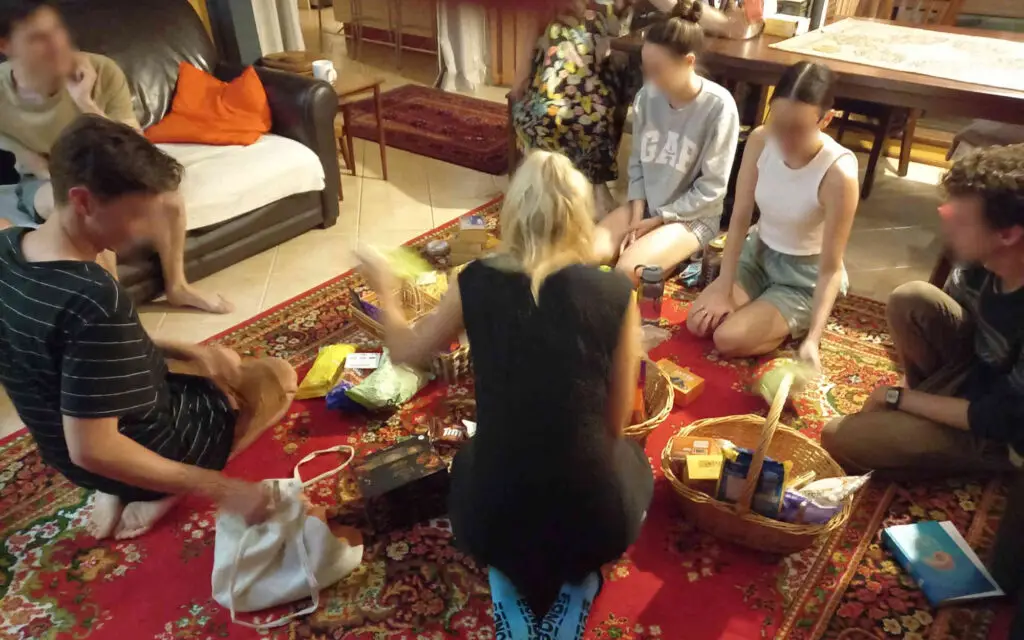
Word, Spirit, action, community
A way to help churches or small groups keep a balance of different aspects of Christian living.

Church in a circle
Different ways to make church more active than passive, more sharing than monologue, and hence more interesting and effective.
Sermons: not a good way to teach and make disciples
Learn how to communicate best to the brains God has given us. Sermons are not the best way.

Missional communities – a way to multiply the church
A new form of church – small groups meeting in pubs and cafes and other public places.


Leave a Reply